Norrtälje
Let the Right One InNorrtälje is a practical waypoint in Oskar’s journey away from his father’s home and toward Stockholm City. He reaches it asleep on a bus, passes through it on the way to Södersvik, and later uses it as the imagined first step in a plan to leave again. The town matters less as a destination than as a point from which his changing sense of direction becomes visible.
A Stop on the Outward Journey
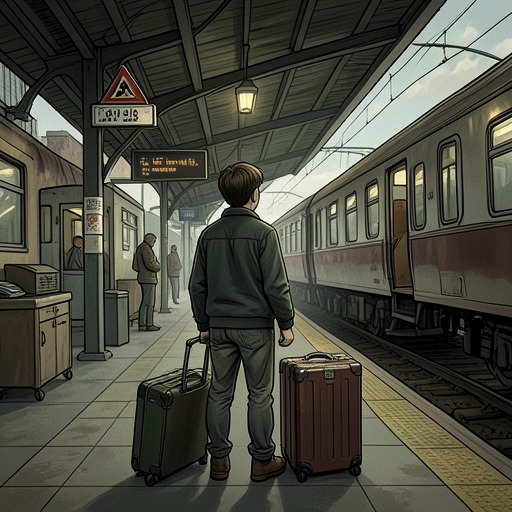
Oskar has slept only four or five hours, worried that Eli will come and that he will have to push her away. On the bus to Norrtälje, he falls asleep and does not wake until they arrive. He stays awake on the onward bus toward Rådmansö Island, making a game of recalling landmarks as they pass. In Spillersboda, a girl who resembles Eli boards; Oskar watches her neck, and the sight brings his fear of Eli’s vampirism back into focus.
Norrtälje is also the point from which Oskar’s father meets him for the final leg to Södersvik. Three quarters of an hour after boarding there, Oskar reaches Södersvik and gets off near the store. His father waits below the stairs. The arrival turns a bus journey into a reunion: Oskar feels briefly larger after the week’s events, but standing before his father, he falls into the adult’s outstretched arms.
A Planned Route Back
Later, after leaving his father’s house at night, Oskar walks toward the store and considers how to get away. He knows from the bus schedule that the last bus from Norrtälje leaves at about half past twelve. His plan is to reach Norrtälje, use a pay phone to tell his father he has returned to Stockholm City, and say he will spend the night at a friend’s house before going back to his mother the next morning. It is a plan, not a completed journey in the scene: Norrtälje gives him a route and a cover story, while he is still walking along the road.
A Waypoint and a Claim to Choice
The two appearances give Norrtälje contrasting functions. On the outward trip, it is a stop in a journey arranged around his father’s pickup; on the return journey he imagines, it is a place from which he can make his own departure seem manageable. After deciding what he will tell his father, Oskar throws his rubber boots into a ditch, then retrieves them and stuffs them into his pockets. He continues walking, feeling that he now decides where he is going. Norrtälje remains ahead as a practical possibility, but the decisive change occurs on the road: Oskar begins to experience the journey as his own.